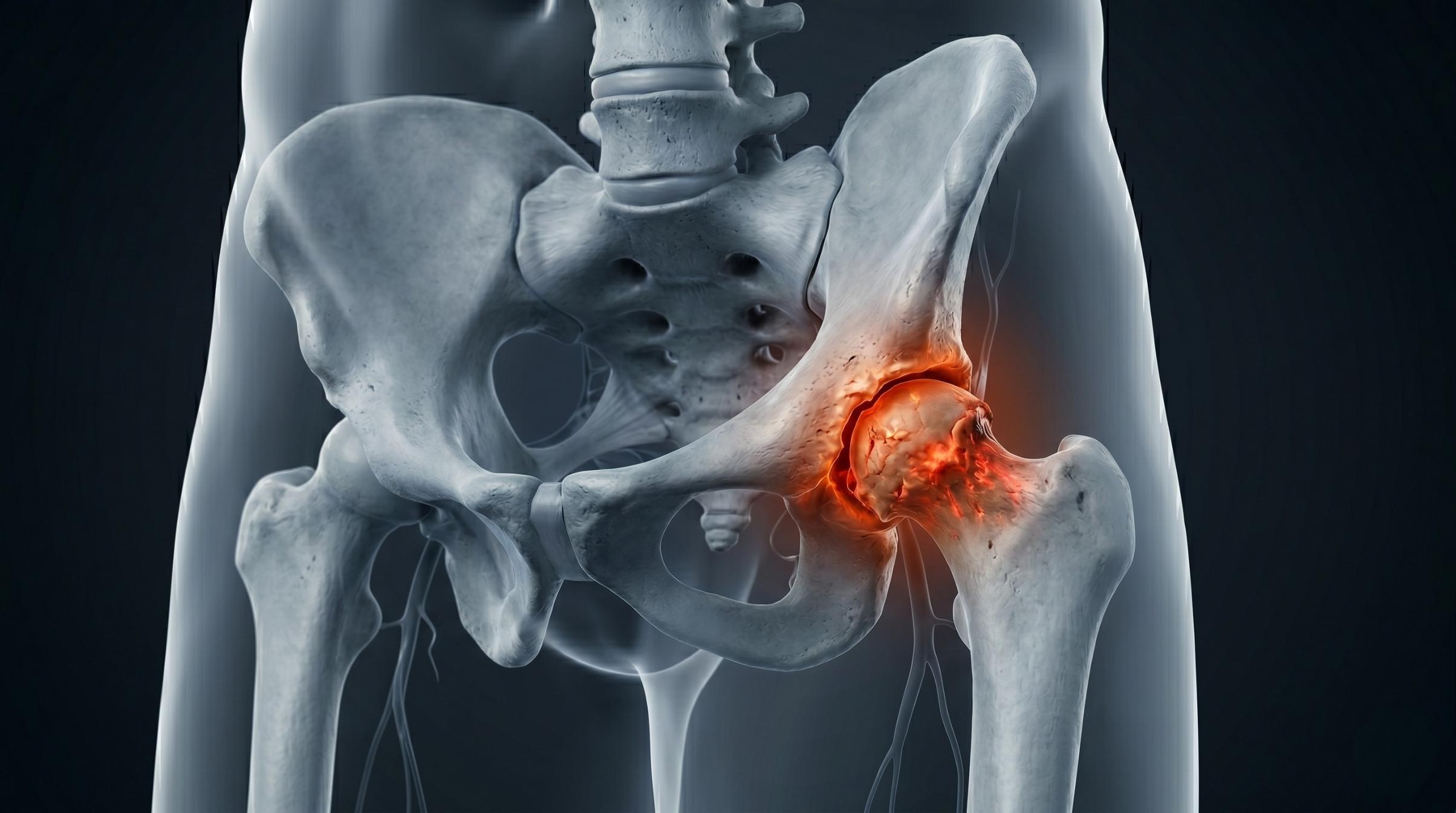
Hip osteoarthritis is one of the most common reasons people come to see me. If you have been told you have it, or you suspect you might, here is a clear explanation of what it is, what to look out for, and when it may be time to act.
What is hip osteoarthritis?
Hip osteoarthritis is wear and tear of the cartilage that cushions the hip joint. As that cartilage thins, you eventually get bone rubbing against bone. It tends to affect people over 50, and the pain usually builds slowly over months, sometimes years.
The symptoms to watch for
As it progresses, hip osteoarthritis tends to announce itself in familiar ways.
- Pain in the hip or groin, often worse with activity.
- Stiffness, particularly first thing in the morning.
- Swelling or a grinding sensation when you move.
- Reduced range of movement, so the joint simply does not move as freely.
As movement reduces, simple tasks become difficult. Many patients first notice it with everyday things like putting on shoes and socks, or cutting their toenails.
When does it lead to surgery?
Not every case needs an operation, and surgery is never the first step. The usual approach is to exhaust non-surgical options first: rest, gentle exercise, weight management, physiotherapy, and painkillers.
If those measures no longer help, and the pain is genuinely affecting your quality of life, then surgery such as hip replacement may be the next step. The right time is a personal decision, made together once conservative options have been explored.
Hip osteoarthritis is wear and tear of the cartilage in the hip joint, common over the age of 50. It causes pain, stiffness, and reduced movement, making everyday tasks harder. Non-surgical options come first, and surgery is considered only when they no longer control symptoms that are affecting your life.