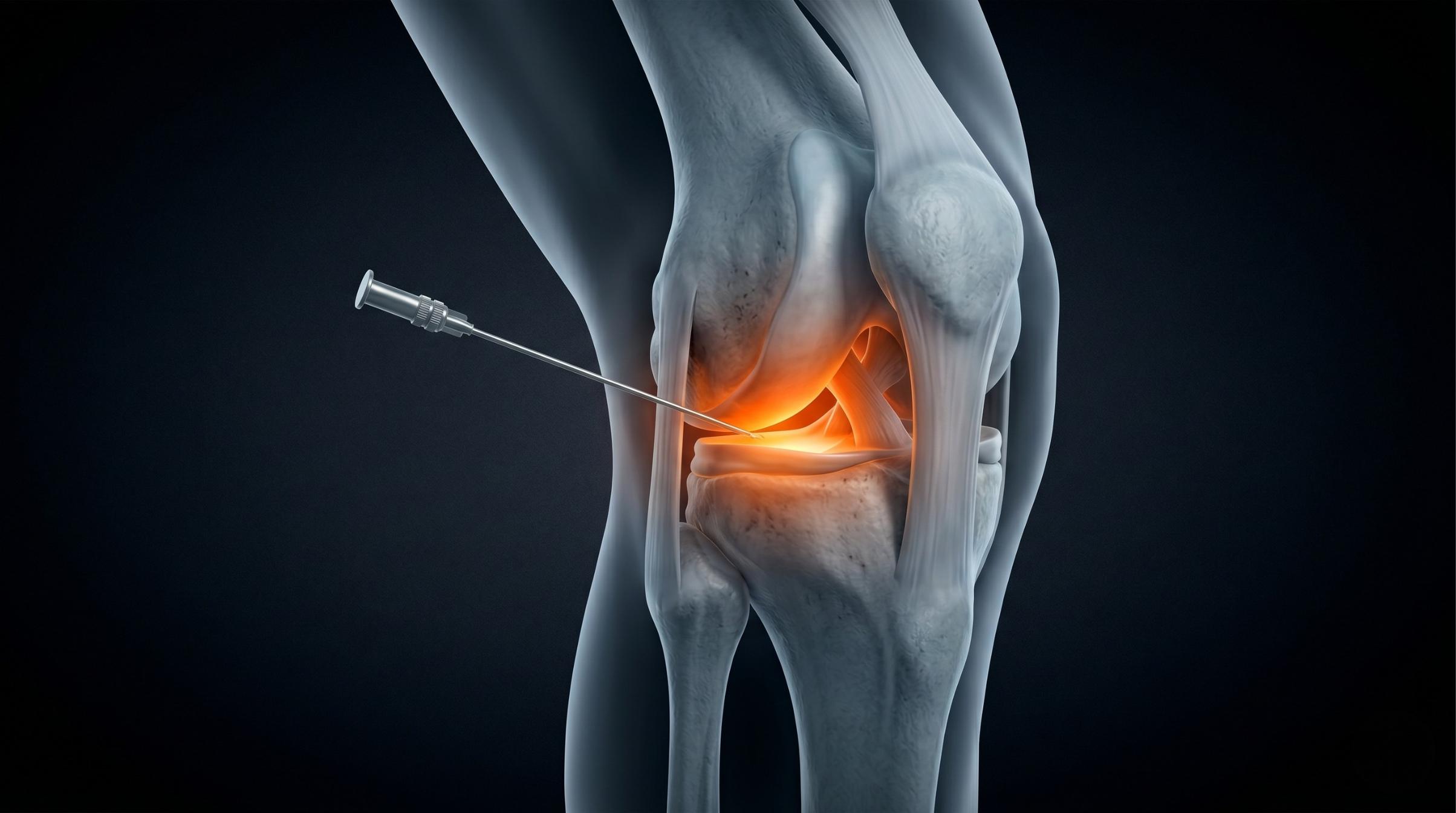
Injections can reduce pain and inflammation in an arthritic hip or knee, settle a flare, or buy comfortable time before surgery. Mr Kumar offers four types, matched to your problem.
An injection delivers treatment directly into or around the joint, where it can reduce pain and inflammation without the need for surgery.
Injections do not cure arthritis, but they can be valuable. They settle a painful flare, help you stay active, and sometimes give many months of relief. For some patients they are enough on their own. For others they buy comfortable time until surgery is the right step.
They are one tool among several. Physiotherapy, weight management, bracing and, in time, surgery all have their place. The right choice depends on your joint, your symptoms and your goals, which is what Mr Kumar will assess with you.
Each works differently. Mr Kumar will explain which is likely to help your hip or knee, and why.
A corticosteroid that calms inflammation quickly. Useful for settling a painful flare and giving short to medium-term relief.
When steroids help →Platelet-rich plasma, prepared from a small sample of your own blood, concentrated and injected to support the joint and reduce inflammation.
What is PRP? →A gel-like substance that supplements the joint's natural fluid, aiming to lubricate and cushion an arthritic joint.
A newer injectable hydrogel for knee osteoarthritis that cushions the joint, with relief that can last for an extended period.
Injections are often the right next step when simpler measures are not quite enough, but surgery is not yet the answer. You might recognise:
Most injections are given in a short outpatient appointment. The area is cleaned, and the injection is placed accurately into or around the joint, sometimes with imaging guidance for precision. PRP involves a quick blood sample first, which is then prepared before injection.
You can usually go home the same day and return to gentle activity soon afterwards. Mr Kumar will give you clear aftercare advice tailored to the injection you have had.
An injection is a small procedure with a big aim: to ease your pain and keep you moving while you and Mr Kumar plan your care.
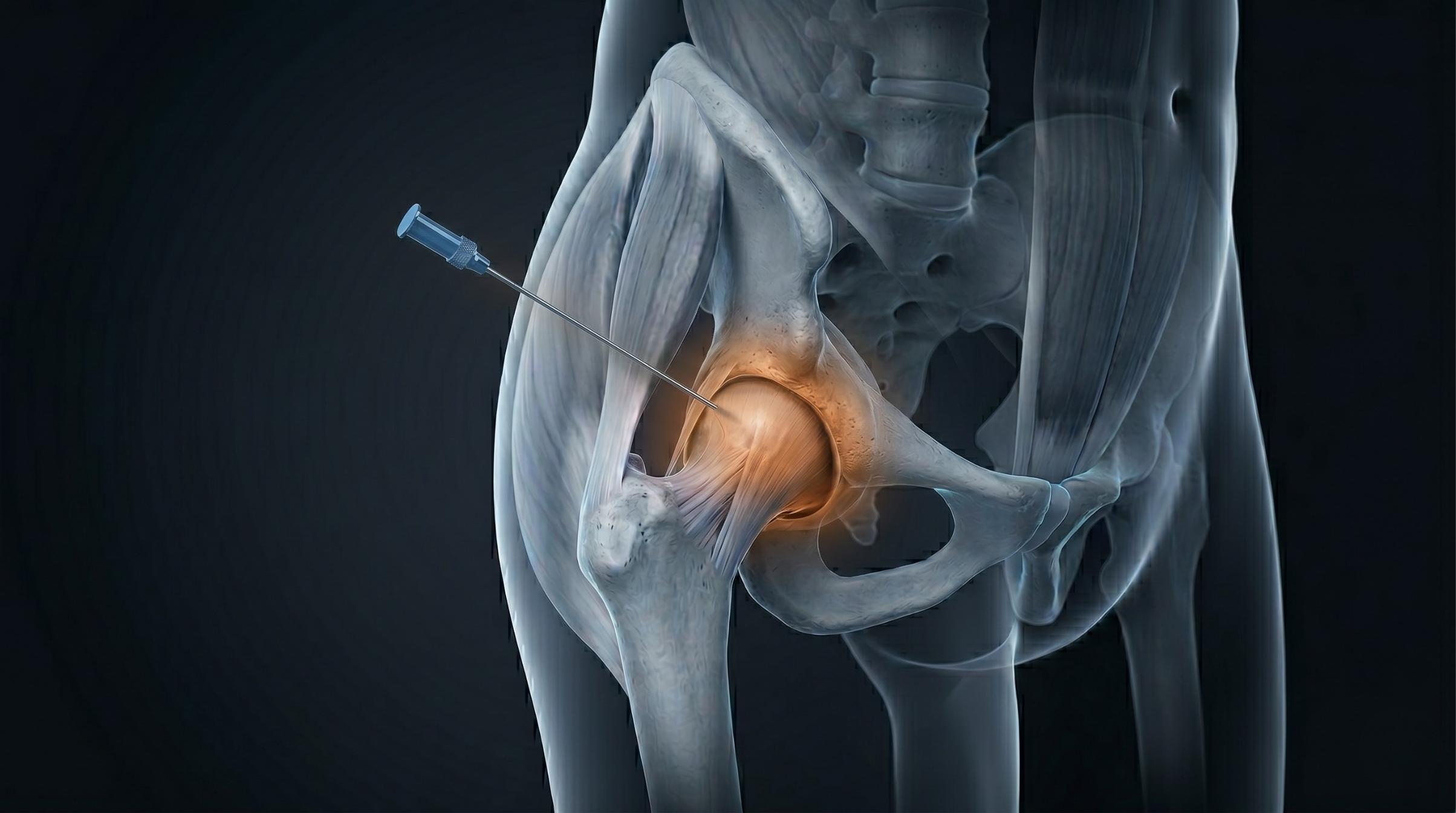
How quickly an injection works, and how long it lasts, depends on the type and on your joint. Mr Kumar will set out realistic expectations before you decide.
Injections are not a cure, and results vary between patients. Mr Kumar will be clear about what a given injection can and cannot do for your joint.
Injections are most often used to manage arthritis of the hip and knee, alongside other care.
Injections cost considerably less than surgery, and the exact fee depends on the type of injection. Your fee is confirmed clearly before you proceed.
Injection fees vary by type. PRP and Arthrosamid differ from a standard steroid or hyaluronic acid injection. Your fee is confirmed at enquiry.
Ask about injection fees →It depends on your joint, your symptoms and your goals. A steroid settles a flare quickly, hyaluronic acid lubricates the joint, PRP uses your own blood to support it, and Arthrosamid is a longer-lasting option for the knee. Mr Kumar will recommend the one most likely to help you.
No. Injections do not cure arthritis, but they can reduce pain and inflammation and give you comfortable time, sometimes for many months. They work best as part of a wider plan that includes physiotherapy and activity.
Most patients tolerate injections well. There may be brief discomfort, and Mr Kumar takes care to place the injection accurately, using imaging guidance where it helps. You can usually go home the same day.
It varies by injection type and by patient. Some injections act quickly and last weeks to months, others build more slowly. Mr Kumar will set out realistic expectations for the injection you choose.
For some patients, injections give enough relief to delay or avoid surgery. For others, they are a helpful step before a planned knee or hip replacement. Mr Kumar will help you weigh up the options.
Yes. Most patients are seen within two weeks of enquiry at one of Mr Kumar's Greater Manchester locations.
Book a consultation with Mr Kumar to find out whether an injection is right for your hip or knee. Most patients are seen within two weeks.