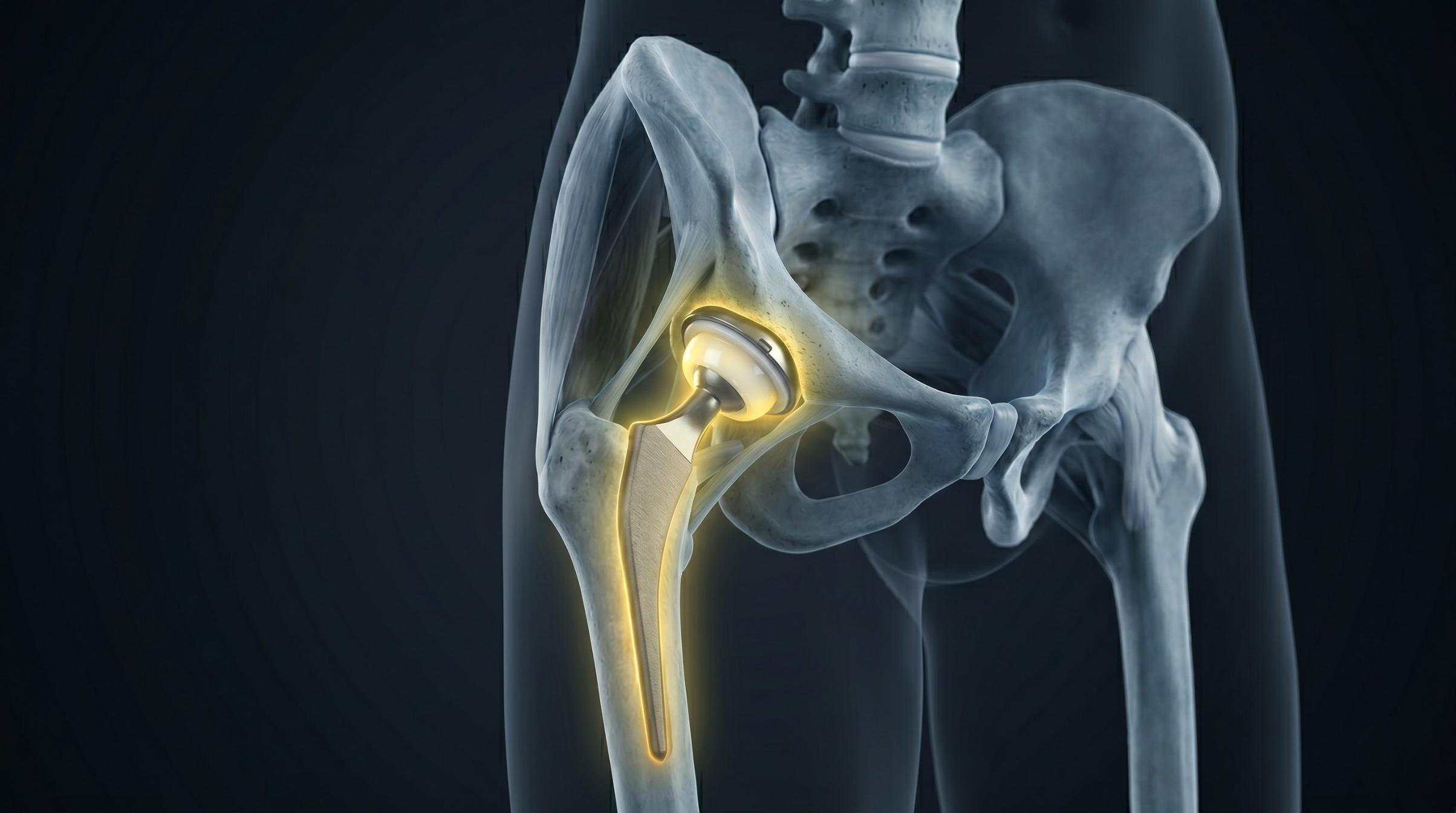
A worn hip joint, replaced with a precision-engineered implant, to take you back to moving without pain.
A hip replacement, also called total hip arthroplasty, replaces a worn or damaged hip joint with an artificial one.
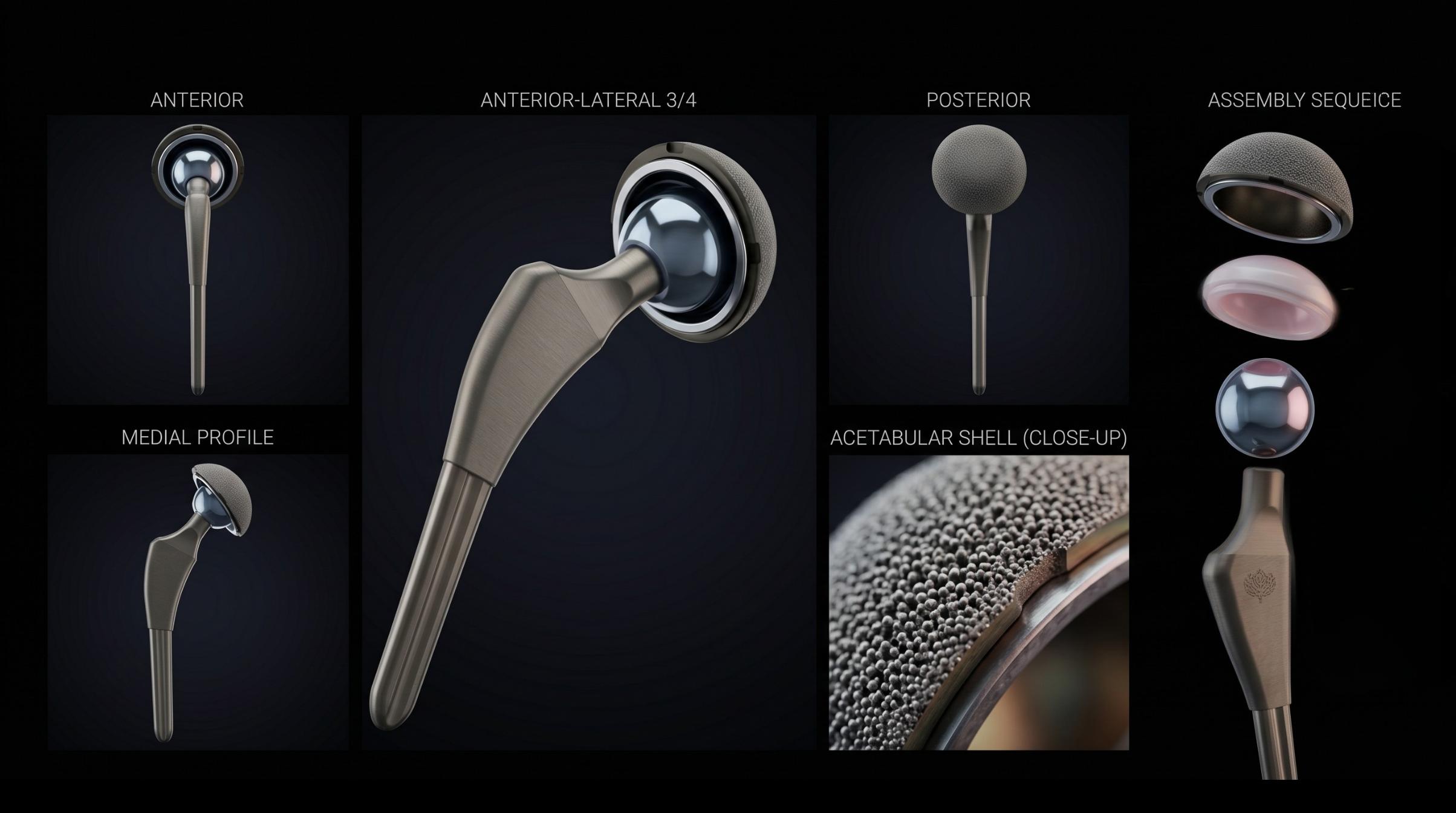
The damaged ball at the top of the thigh bone and the worn socket in the pelvis are removed and replaced with a smooth implant: typically a metal or ceramic head moving against a durable polyethylene or ceramic socket.
It is one of the most successful operations in modern medicine. For most patients, it means lasting relief from pain and a return to the activities that joint pain had slowly taken away.
Andrea was told her concern was cosmetic. Trusting her instincts, she sought a specialist, and within three weeks of surgery she was back to table tennis, yoga and pilates.
I felt my concerns were validated. I'm so glad I came to see the best specialist. I can't feel a thing. Andrea, 69 · Hip patientRead Andrea's full journey →
Hip replacement is usually considered when pain and stiffness start to limit everyday life and non-surgical treatment is no longer enough. You might recognise:
Mr Kumar tailors every plan to your circumstances, activity goals and clinical needs.
Removing the damaged joint surfaces and implanting prosthetic components, with robotic guidance for precise placement.
A 3D model of your hip is created before surgery, and the robotic arm assists Mr Kumar in placing the implant within millimetres of the planned position.
For patients not yet ready for surgery, steroid and hyaluronic acid injections reduce pain and inflammation in the hip joint.
Inflammation of the bursa over the hip can cause significant lateral hip pain. Treatment includes injection therapy and, in persistent cases, surgery.
The worn joint surfaces are removed and replaced with an implant chosen to suit your anatomy and activity level. Mr Kumar will talk you through the implant options and the approach before any decision is made. The aim is a stable, natural-feeling joint that lasts.
Most hip replacements are designed to last fifteen to twenty years or more. Surgery typically takes around an hour to ninety minutes, and most patients are up and moving with support the same day or the next.
The robotic arm does not perform the operation. It assists Mr Kumar in executing the pre-planned implant position with greater accuracy than conventional technique alone.
Recovery is a gradual, supported process. Most patients are walking with aids within a day, home within one to three days, and back to light daily activities within a few weeks. Physiotherapy begins early and is central to a strong recovery.
Most patients go home 1 to 3 days after a hip replacement. You will need someone to collect you, and you should not drive for at least 6 weeks. A physiotherapy programme is arranged before you leave.
Typical UK self-pay range, depending on hospital, implant, and individual factors.
See a full cost breakdown →Most modern hip implants are designed to last fifteen to twenty years or more, depending on your activity level and weight. Many last considerably longer.
Most patients are walking with aids within a day and home within one to three days. Light daily activities return within a few weeks, most patients are walking without aids by around six weeks, and full recovery is expected for most by twelve months.
Hip replacement is one of the most successful operations in modern medicine. As with any surgery there are risks, and Mr Kumar will explain your individual risk profile clearly at consultation so you can make an informed decision.
Most patients do not drive for at least six weeks. When you return to work depends on your role and your recovery, and Mr Kumar will advise you at your review.
The aim of surgery is to return you to the activities that joint pain had taken away. Most patients are back to most normal activities within three to six months. Mr Kumar will discuss your specific goals with you.
Privately, you choose the timing of your surgery, you are seen quickly, and your care is led by Mr Kumar throughout. The operation itself follows the same evidence-based principles.
Yes. Mr Kumar offers robotic hip and knee replacement and will discuss whether it suits your anatomy at consultation. You can read more about the robotic approach here.
Book a consultation with Mr Kumar to discuss whether a hip replacement is right for you. Most patients are seen within two weeks.