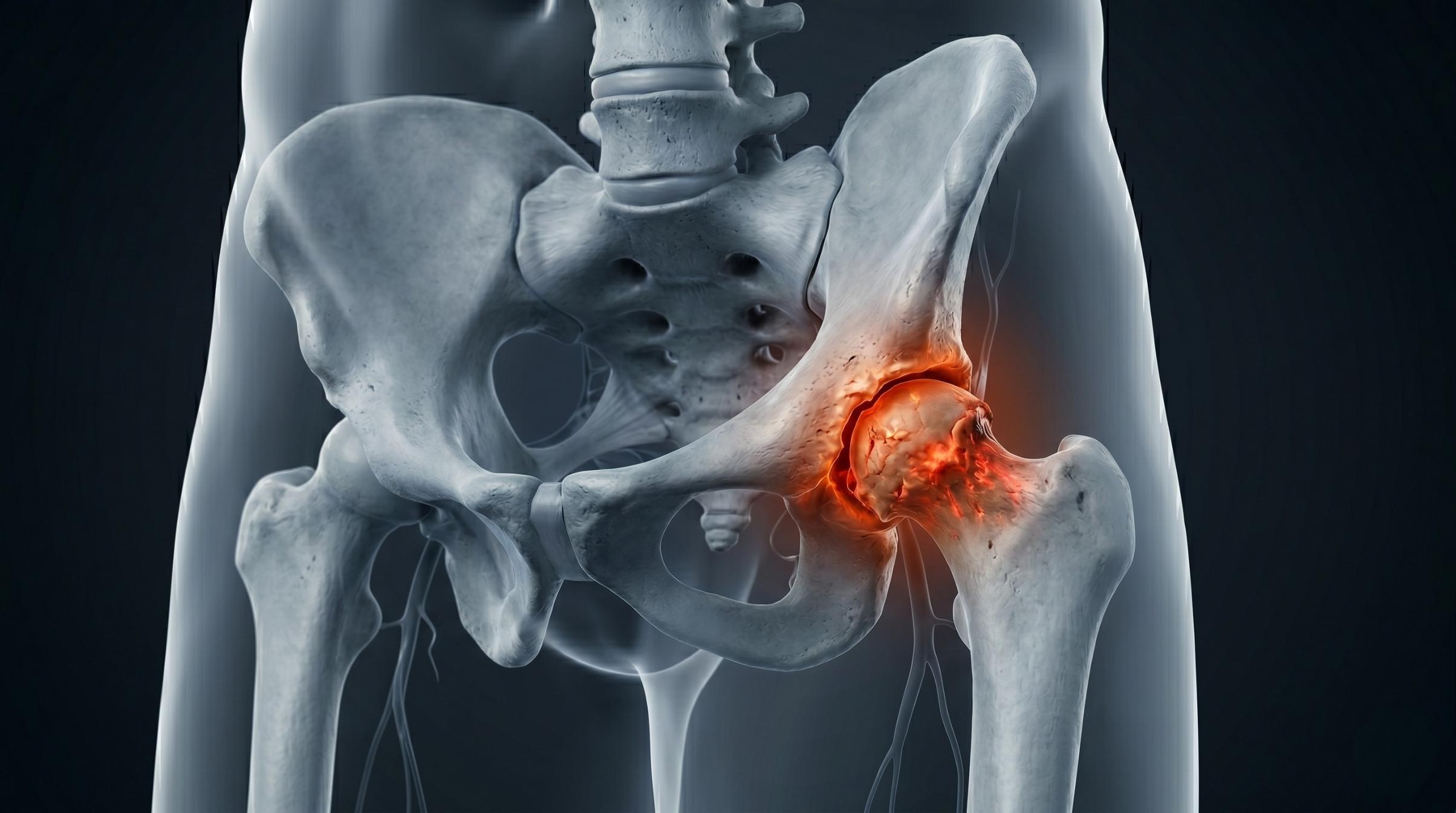
The most common cause of hip pain as we get older. Understanding what is happening in the joint, and the options at every stage, is the first step to moving without pain again.
Osteoarthritis is the gradual wearing of the smooth cartilage that lines the hip joint, the cushion that lets the ball move freely in its socket.
As that cartilage thins, the surfaces no longer glide as they should. The joint becomes stiff and painful, and over time the bone underneath can change shape. It tends to develop slowly, often over years, which is why many people only seek help once it starts limiting everyday life.
It is very common, and it is manageable. There is a clear path of treatment, from simple measures through to a hip replacement if and when one is needed. Most patients work through that path gradually, with surgery considered only when other options no longer give enough relief.
To learn more about the condition itself, you can also read our guide to hip osteoarthritis on the blog.
Andrea was told her concern was cosmetic. Trusting her instincts, she sought a specialist, and within three weeks of surgery she was back to table tennis, yoga and pilates.
I felt my concerns were validated. I'm so glad I came to see the best specialist. I can't feel a thing. Andrea, 69 · Hip patientRead Andrea's full journey →
Hip osteoarthritis often announces itself slowly, with symptoms that build over months. You might recognise:
Mr Kumar always begins with the least invasive option that can give you good relief, and moves on only when it is the right time for you.
Targeted exercise keeps the muscles around the hip strong and the joint mobile. It is the foundation of managing arthritis well.
Reducing load through the joint can ease symptoms meaningfully. Small, sustained changes make a real difference over time.
Steroid, hyaluronic acid, PRP and Arthrosamid injections can reduce pain and inflammation when symptoms flare.
Explore injections → SurgicalWhen arthritis is advanced and other measures no longer help, a hip replacement offers lasting relief and a return to movement.
About hip replacement →Osteoarthritis changes gradually. Early on, symptoms come and go, and simple measures keep you comfortable. As the cartilage wears further, pain and stiffness become more constant and start to shape your day.
Knowing where you are on that path helps you and Mr Kumar make calm, well-timed decisions. There is rarely any rush. The aim is to keep you active and comfortable for as long as possible, and to choose surgery at the moment it will help you most.
You are not a procedure, you are a person. The right time to act is the time that is right for your life, not just your X-ray.
Most people manage their symptoms for a long time with conservative care, and those who do go on to surgery can expect lasting relief. The path is gradual and supported at every stage.
Hip osteoarthritis is one of the most treatable joint conditions. Whatever stage you are at, there is a clear option to ease your symptoms and protect your mobility.
Assessment and conservative care, including injections, are far less costly than surgery. Where a hip replacement is the right step, the typical self-pay range is set out below.
Typical UK self-pay range for a hip replacement, depending on hospital, implant, and individual factors. Injections and consultations cost considerably less.
About hip replacement →No. Many people manage hip osteoarthritis for years with exercise, weight management and injections. Surgery is considered only when these measures no longer give you enough relief, and the decision is always yours to make with Mr Kumar.
Staying active, keeping the muscles around the hip strong, and maintaining a healthy weight all help to protect the joint and ease symptoms. Mr Kumar will give you clear, practical advice tailored to your hip at consultation.
Injections do not cure arthritis, but they can reduce pain and inflammation and give you comfortable time, sometimes for many months. You can read more on our joint injections page.
The right time is when pain and stiffness are limiting your life despite other treatment, not simply what an X-ray shows. Mr Kumar reviews your symptoms and your goals together so surgery is timed to help you most.
No. Hip pain can also come from the soft tissues around the joint, the lower back, or conditions such as trochanteric bursitis. A proper assessment with Mr Kumar identifies the true source before any treatment is recommended.
Yes. Most patients are seen within two weeks of enquiry at one of Mr Kumar's Greater Manchester locations.
Book a consultation with Mr Kumar for a clear diagnosis and a plan tailored to where you are. Most patients are seen within two weeks.